Buyer Guides
Licensed Character Artwork for Pajamas: What Brands Need Before Production
What a factory needs before it can print a licensed character on pajamas: written permission that names sleepwear, a complete artwork package, and the licensor approval points that gate every sample.
By PajamaWorks Team, Sleepwear production team, Dongguan Hualingniao Apparel ·
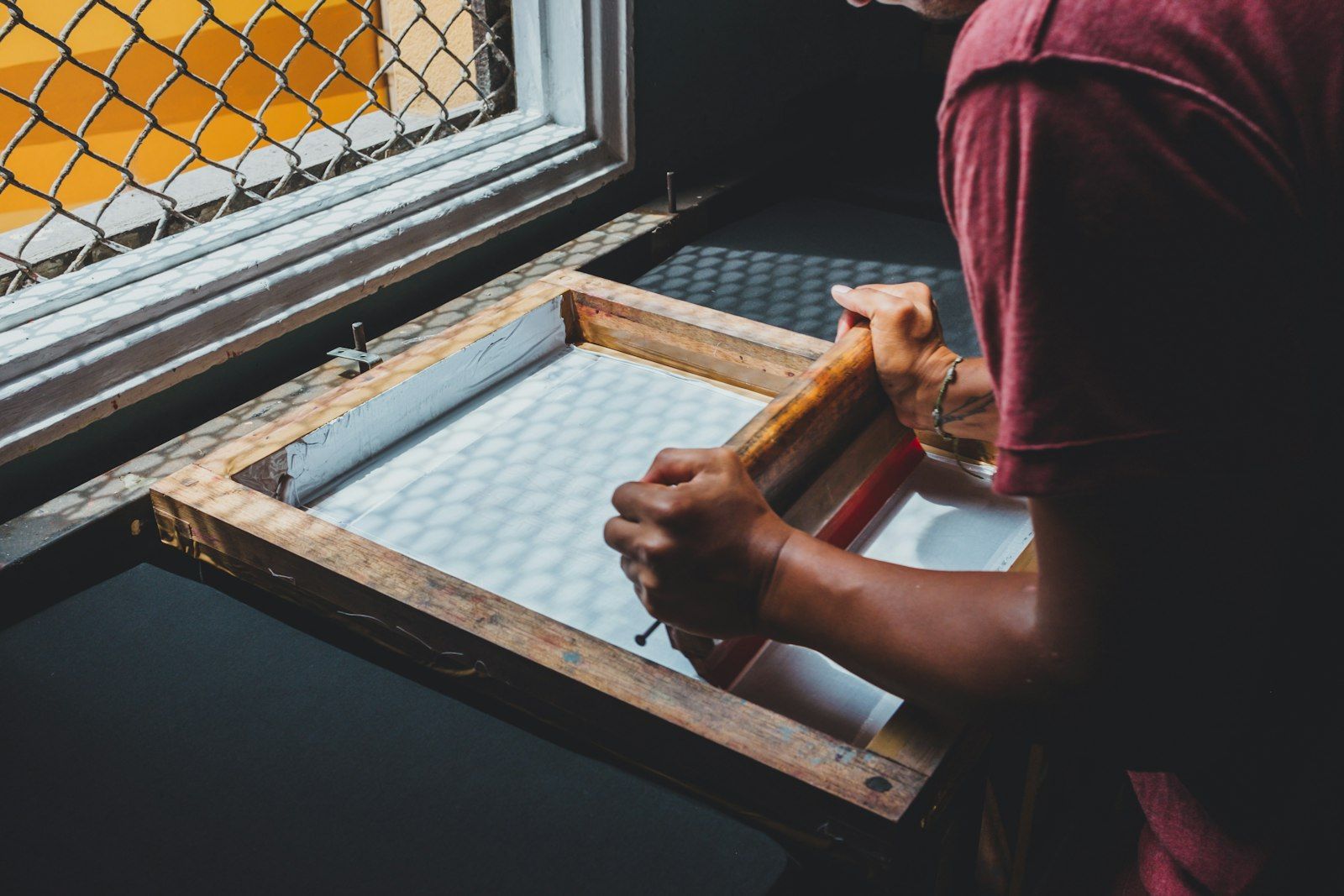
Before a factory can put a licensed character on pajamas, three things have to exist: written permission that names sleepwear as a covered product, an artwork package supplied or approved by the rights holder, and an approval schedule the licensor will hold you to at concept, strike-off, and sample stages. A manufacturer produces to those approvals. It cannot grant them, verify them, or stand in for them.
That last sentence is where most licensed projects stall. A brand arrives with a beautiful character, a launch date, and a purchase order, and no document that says who is allowed to sell it on a pajama.
A licensed range is normal development with two extra gates
Nothing about a character pajama is unusual to manufacture. The pattern, the fabric, the grading, the sewing, and the packing are the same work described in how pajamas are manufactured. What licensing adds is two gates that sit outside the factory’s control.
The evidence gate. Does in-scope written permission exist, and can it be produced on request? This gate opens before quoting, not before shipping.
The approval gate. Does the rights holder sign off the product at each defined stage, in writing? This gate stays open through the whole development and closes only when the last approval is on file.
Plan both as scheduled items with owners and dates. A licensor’s approval turnaround is set by the licensor, not by your production calendar, and it is the single most common reason a character range misses a season.
What actually counts as evidence of rights
“We have permission” is not a rights position. What a factory can work from is a document, and what matters is its scope.
Check that the agreement names, at minimum:
- the specific characters, artwork, names, and logos covered;
- the product categories — “sleepwear” or “pajamas” specifically, not “apparel” generically, because apparel licenses are routinely carved up by category;
- the territories where the goods may be sold;
- the term, with start and end dates, and what happens to unsold stock afterward;
- whether the rights are exclusive or non-exclusive;
- the approval process and who at the licensor holds the pen;
- whether manufacture in a named country is permitted, and whether the factory must be disclosed or pre-approved.
That last point catches brands out. Many licenses require the licensee to declare its manufacturing sites, and some require the factory to be audited or listed before production starts. If your agreement says that, tell us early — it is a lead-time item, not a formality.
Where the licensor supplies a style guide, it usually carries binding rules about color values, minimum sizes, clear space, prohibited alterations, and how the mark may be locked up with your own brand. Those rules travel into the tech pack, because they constrain the print the same way a fabric does.
Copyright and trademark are two different permissions
A character is usually protected twice over, and clearing one does not clear the other.
Copyright covers the artwork itself. The U.S. Copyright Office explains that copyright protects original works of authorship from the moment they are fixed in a tangible form — no registration required for protection to exist — and that reproducing or adapting the work requires the owner’s permission. Copyright also lasts far longer than most people assume, which is why “it’s an old cartoon” is not a defense.
Trademark covers the character’s name and logo as brand identifiers. The USPTO’s explanation of the difference between trademark, patent, and copyright is the clearest short statement of why a single permission is often not enough, and its trademark basics material sets out why a license has to name the goods it covers rather than granting rights at large.
Two practical consequences. An artwork license may not let you print the character’s name on the chest. And permission from an illustrator is not permission from the studio that owns the property the illustrator drew for.
Redrawing does not solve this either. A close derivative of a protected character is still a derivative, and “inspired by” is a marketing phrase, not a rights position.
The four approval points to build into the schedule
Licensors across categories tend to run the same approval sequence. Mapped onto sleepwear, it looks like this:
- Concept. Flat sketches or renders showing the character on the garment — silhouette, placement, scale, colorway. Cheap to change. Almost everything that gets rejected should be rejected here.
- Artwork and print. The separated, production-ready artwork, plus a physical print strike-off or embroidery stitch-out on the actual fabric. Screens and paper proofs are not approvals — the same file reads matte on cotton, glossy on satin, and slightly distorted on a stretchy knit.
- Pre-production sample. A complete garment in the real fabric with the real trims, submitted for permission to begin bulk. This is the sample that defines what bulk must match.
- Production sample. A unit pulled from the actual run and compared against the approved pre-production sample, confirming that what shipped is what was signed off.
Each of those is a submission, a wait, and a response — and each can come back with comments that reopen the previous stage. Build the calendar with that in mind. Our guide to how pajama sampling works covers the factory side of the same sequence; a licensed range runs it with a second approver attached to every round.
Keep an approval log with the date, the version, the person who approved, and the file that was approved. When a licensor’s team changes mid-season — and it does — the log is the only thing that keeps the earlier decisions in force.
The artwork package a factory can actually use
Licensor style guides are written for brand consistency. Factories need production data. Both have to arrive together.
For an all-over print, we need vector or high-resolution artwork with the repeat defined, the base repeat size and the garment size it was drawn for, the scaling rule at each size break, ground color, motif direction, and behavior at plackets, side seams, cuffs, and waistbands. A repeat does not shrink with the garment — the mechanism is set out in developing matching family and couple pajamas, and it matters more on a character range because a distorted face is instantly visible where a distorted floral is not.
For a placement print or embroidery, we need the finished artwork size, a placement rule expressed per size rather than one measurement for the whole range, color references as Pantone numbers or a physical swatch, and confirmation of which elements may not be altered.
Two constraints worth settling before the licensor approves a concept. Fine gradients and small text do not survive embroidery and have to be simplified or printed. And registration on a stretchy knit is less precise than on a stable woven, so a character with tight multi-color registration is a different proposition on jersey than on a woven cotton poplin. Choose the substrate with the artwork, not after it.
Where the license sets a written quality standard, translate it into recognized methods rather than adjectives. AATCC standard test methods give comparable colorfastness and dimensional-change results that a licensor’s quality team can read, which is more useful than a promise that the print “holds up well.”
Character sleepwear is usually children’s sleepwear
Character-led pajamas skew heavily toward kids’ sizes, and that adds a second compliance track that runs independently of the license.
In the United States, the CPSC distinguishes children’s sleepwear subject to 16 C.F.R. Parts 1615 and 1616 from defined infant and tight-fitting products, which are treated differently. Which route applies depends on the product’s size, fabric, and construction, so it has to be settled before the pattern is finalized. Products subject to a children’s product safety rule also require a Children’s Product Certificate based on the required testing, issued by the responsible importer or domestic manufacturer rather than by the sewing factory.
The two tracks interact badly if they are run in sequence. A licensor comment that changes the ground fabric can move the garment’s compliance position; a compliance decision that changes the fabric can invalidate an approved strike-off. Run them in parallel, share every change with both approvers, and do not treat a licensor approval as a safety approval — they answer different questions.
Labeling and packaging still follow the law
A license tells you what the licensor requires on the product. It does not replace what regulation requires.
Every garment still needs correct fiber content, country of origin, and responsible business identity under FTC textile labeling guidance. On top of that, the licensor will usually specify copyright and trademark notices, a licensed-product hang tag, sometimes a holographic or serialized authenticity element, and approved wording for the brand lockup. Those are additional pieces of trim with their own sourcing and approval time — plan them with labels and packaging rather than at the end.
There is also a border dimension worth understanding before goods move. Rights holders record their trademarks and copyrights with U.S. Customs and Border Protection for border enforcement, and CBP publishes an annual record of IPR seizures. For a legitimately licensed range this is a paperwork question — have documentation available and make sure the marks on the carton match the marks on the agreement. For an unlicensed one, it is the point of failure, and it happens after the goods are paid for.
If there is no license
Plenty of brands want the effect of a character range without a property to license. That is a real product strategy, not a consolation prize.
- Commission original characters. Buy the copyright outright in a written assignment rather than taking a use license from the illustrator, and specify apparel use, territory, and term in the agreement. You then own the asset and can extend it across seasons.
- Use public-domain artwork carefully. Some works have entered the public domain, but a specific modern adaptation of an old character can still be protected, and a name can still be a live trademark even when the original artwork is not. Take advice on the specific work rather than the general rule.
- Design a motif system instead of a character. Recurring prints, mascots, and graphic worlds built in-house carry no royalty, no approval queue, and no end date — which for a private-label program is often the stronger economics.
PajamaWorks does not assess whether your rights are sufficient, and we will not produce third-party artwork without documentation that permission exists. That is a limit worth stating plainly: it protects your order as much as it protects us.
What to send for a licensed-range quote
To quote a licensed character range accurately, we need:
- confirmation that a license exists, with the product category, territory, and term it covers;
- any manufacturing-site disclosure or approval requirement in the agreement;
- the licensor style guide and its binding artwork rules;
- artwork files with repeat and scaling information, or the placement artwork with per-size placement rules;
- color references as Pantone numbers or physical swatches;
- the licensor’s approval stages and expected turnaround;
- garment types, size ranges, and whether children’s sizes are included;
- required licensed labeling, hang tags, and authenticity trims;
- target quantities by style, colorway, and size.
If the range is tied to a holiday, plan it alongside our Christmas pajama production timeline so the licensor’s approval rounds sit inside the seasonal calendar rather than on top of it, and record the fixed and open decisions in a tech pack.
PajamaWorks manufactures character-led pajama sets, including women’s and men’s blocks under one artwork, with strike-offs and pre-production samples produced for your licensor to approve and inspection against the sealed sample. Send the list above through the quote form and we will map the approval points and artwork requirements onto a realistic development plan.