Buyer Guides
How to Develop Matching Family and Couple Pajamas
How to specify a matching family and couple pajama range: the level of matching, one shared artwork, separate adult and children's size systems, a split compliance route and a realistic variant count.
By PajamaWorks Team, Sleepwear production team, Dongguan Hualingniao Apparel ·
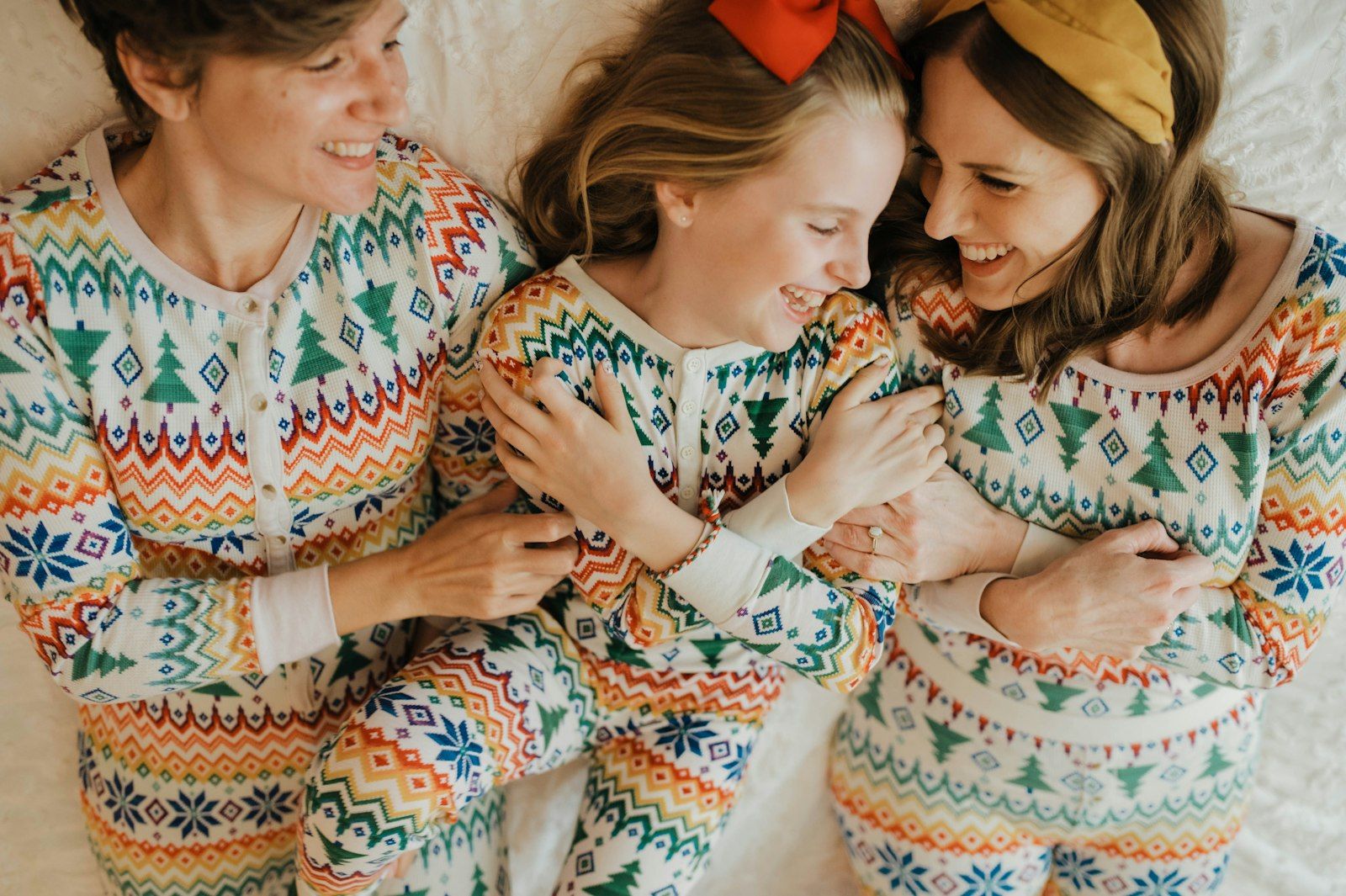
Treat a matching family or couple range as one design system applied to several different bodies, not as one garment reissued in more sizes. Decide how closely the pieces must match, lock one artwork with per-size scale rules, build a separate pattern block for each wearer group, and run the children’s styles on their own compliance track. Everything after that is ordinary production.
Most matching collections go wrong in the same place: the range is quoted as a single style, then discovered during sampling to be four different products that happen to share a print.
Define what “matching” actually means
“Matching” covers at least three commercial ideas, and they cost different amounts to make.
- Identical: every piece uses the same fabric, the same print, and the same colorway. Visually strongest, hardest to grade, and the most sensitive to print scale.
- Coordinated: the pieces share a palette and a motif family but differ by garment — an all-over print for the children’s styles and a solid with a printed trim for the adults, for example.
- Linked by detail: the pieces share only a piping color, a contrast cuff, an embroidery, or a woven label. Cheapest to produce and the easiest to extend later.
Write the chosen level into the brief in one sentence, because it decides how much of the range must move together. In an identical range, a fabric substitution affects every style at once. In a linked range, one style can change without reopening the others.
Also decide what is allowed to differ. Sleeve length, closure type, and pocket presence can vary between an adult and a toddler version without breaking the look; ground color and motif scale usually cannot.
Build one design system, not one garment in more sizes
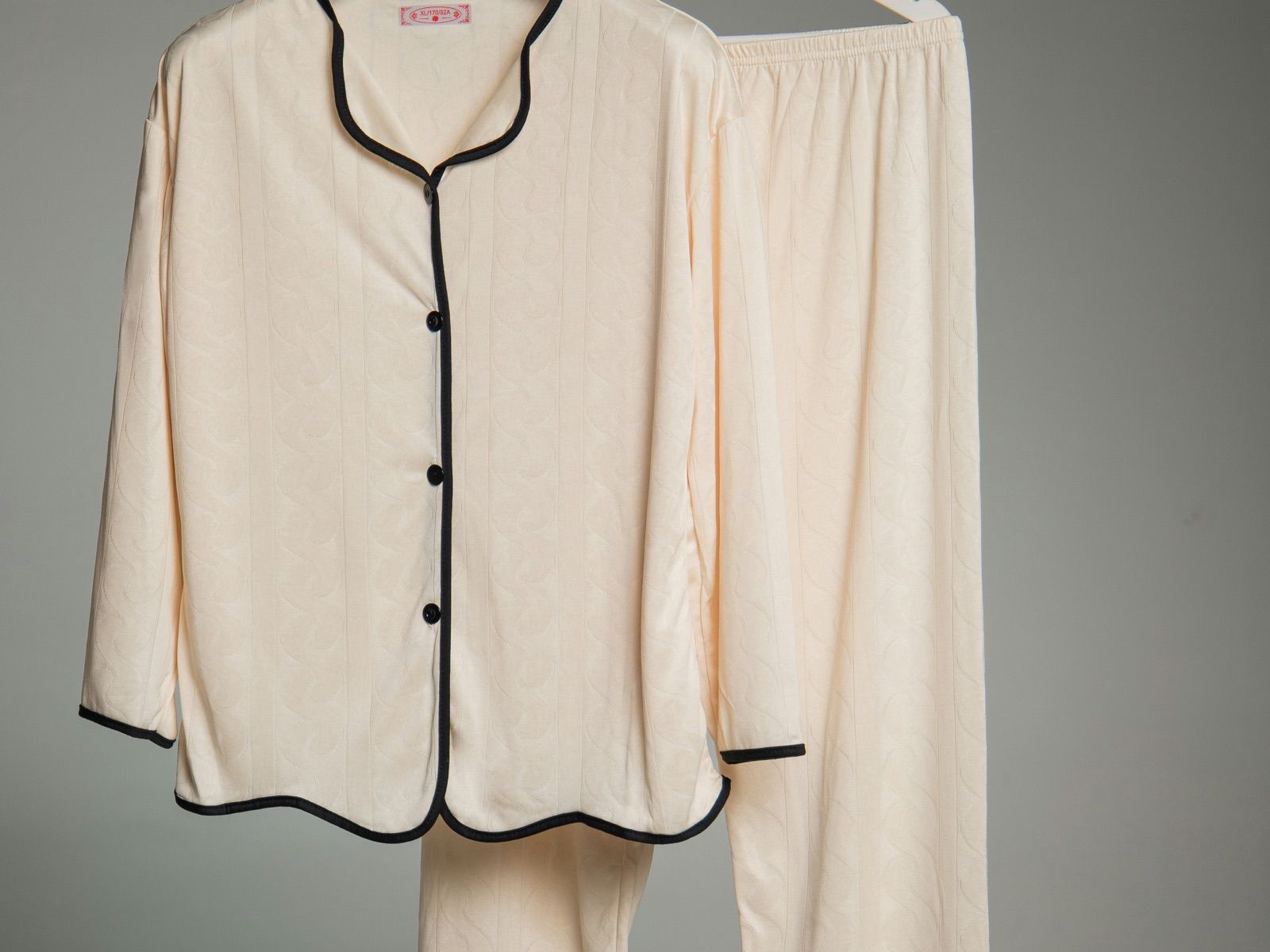
A family range typically contains several distinct products: a women’s set, a men’s set, a children’s set, sometimes a baby style, sometimes a pet piece. They share artwork and brand, not construction.
Each wearer group needs its own pattern block. An adult button-front shirt and a child’s snug-fitting knit sleeper have different armhole shapes, different ease, different closures, and different safety considerations. Scaling an adult pattern down does not produce a wearable children’s garment — it produces an adult silhouette in a small size, which usually fails on rise, neck opening, and sleeve proportion.
Details also have to be re-decided per group rather than inherited. A functional drawcord waistband is routine on adult pants and is a decision that needs checking on a child’s garment. The CPSC’s guidance on drawstrings in children’s upper outerwear covers a different product category than sleepwear, but it is the clearest illustration of the principle: cord and trim details carry rules that depend on the garment and the wearer, so they cannot be copied sideways across a range.
Specify, per wearer group: silhouette, closure, waistband, neckline, cuff and hem finish, trim, and any detail that is deliberately shared. Our pattern making and size grading pages describe where these decisions land in development.
Make print scale a written specification
This is the single most common surprise in a matched range. One artwork file printed at one repeat size looks correct on an adult back panel and oversized on a toddler front. The motif does not shrink with the garment.
Decide and record:
- the base repeat size and the garment size it was designed for;
- whether the repeat is scaled for smaller sizes, and by what percentage at which size break;
- the ground color, which must be identical across every style in an identical range;
- motif direction, and whether the print is one-way;
- placement rules at plackets, side seams, cuffs, and waistbands;
- how a placement print is positioned — the same measurement from the shoulder will sit differently on a 2T and an adult L, so specify a rule per size, not one number.
A scaled repeat is a legitimate design choice, not a defect, but it must be a decision. If the artwork is not scaled, say so explicitly so the factory does not “helpfully” adjust it. Ask for a strike-off on the actual production fabric for each substrate in the range, and review them side by side rather than one at a time. The printing and embroidery process page covers what each print trial should confirm.
Decide the size architecture before the size chart
Adult and children’s sizing are separate systems with separate reference documents, not two ends of one scale. ASTM International publishes distinct body-measurement tables for adult female misses, adult male, girls, and boys figure types. A brand does not have to adopt them, but the fact that they exist as four documents is the point: one grading rule cannot serve the whole range.
Before the chart is drawn, fix:
- the size range per wearer group, including where the children’s range stops and the adult range starts;
- whether an in-between size is served by the children’s block or the adult block;
- the fit intent for each group — relaxed adult sleepwear and a snug children’s style are different targets;
- which base size is sampled and fitted first for each block;
- measurement points and tolerances per group;
- the assortment ratio you will actually buy, by style and size.
The ratio matters more than most brands expect. A family range sells in incomplete combinations — plenty of households need two adult sizes and one child size, and very few need one of everything. A flat size split leaves you holding the sizes nobody bought while the popular ones sell out mid-season.
Fit-check each block on its own body, not on the adult sample alone. A size set or graded fit sample at the extremes of each range catches proportion errors that the base size hides.
Treat the children’s styles as a separate compliance track
If the range includes children, the children’s portion follows its own route from the start. It is not an add-on to the adult approval.
In the United States, the CPSC distinguishes children’s sleepwear that falls under 16 C.F.R. Parts 1615 and 1616 from defined infant and tight-fitting products, which are handled differently. Which route applies depends on the product itself — its size, dimensions, fabric, and construction — so it must be settled before the pattern is finalized, not after a sample looks good.
Products subject to a children’s product safety rule also need a Children’s Product Certificate based on the required testing. The certificate is issued by the responsible importer or domestic manufacturer, not by the sewing factory, and the testing has cost and lead time that belong in the plan before a launch date is promised.
Practical consequences for a matched range:
- the adult and children’s styles may need different fabric decisions even under one print;
- a fabric that passes for the adult set is not automatically acceptable for the children’s set;
- the children’s styles may need dimensions and labeling the adult styles do not;
- a design change late in sampling can move the children’s product from one route to another.
Brands selling children’s sleepwear also benefit from watching what goes wrong in the category. The CPSC publishes recall notices and product-safety explainers on its official YouTube channel, and children’s sleepwear burn hazards appear there regularly. PajamaWorks builds confirmed requirements into the specification; the buyer’s compliance specialist decides what those requirements are.
Couples, pets, and accessories change the risk profile
Couple sets are the simplest extension: two adult blocks, one artwork, and a decision about whether the pieces are sold as one unit or as two independent SKUs. That decision drives packaging, barcoding, and labeling more than it drives production.
Pet pieces and accessories — bandanas, scrunchies, sleep masks, blankets — are attractive because they use leftover print and lift basket value. They are also different products with different patterns, different trims, and different regulatory scope from children’s sleepwear. Confirm capability and scope for each of these before they appear in a lookbook, and keep them out of a launch plan until they are confirmed.
Keep color and hand feel consistent across substrates
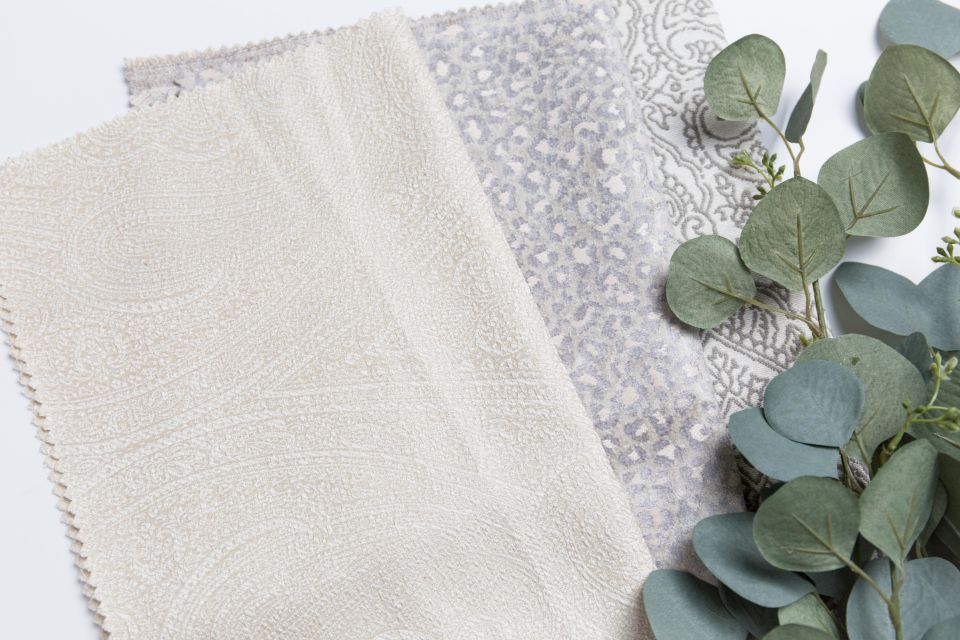
An identical range usually spans more than one fabric. A woven adult set and a knit children’s set will not take the same dye and print in exactly the same way, and the difference is visible when the pieces are photographed together.
Manage this with physical references rather than adjectives:
- approve one physical color standard that every substrate is measured against;
- ask for a strike-off per fabric, not per artwork;
- compare the strike-offs together, in the same light, at the size the customer sees;
- agree a tolerance for how far the second substrate may sit from the standard;
- check appearance after the agreed care process, not only on the unwashed swatch.
Where a claim needs to be defensible, use recognized methods. AATCC publishes standard test methods for colorfastness and dimensional change that give you a comparable result across two fabrics instead of two opinions. Dimensional change deserves particular attention in a matched range, because differential shrinkage between a woven and a knit turns a coordinated set into a mismatched one after a few washes — the mechanism our guide to why pajamas shrink after washing explains in detail.
Fabric certifications are a separate question from performance. If the range will carry a certification claim, confirm the certificate covers the actual fabric being used and say only what it covers; OEKO-TEX’s official channel explains the scope of common textile certifications, which is worth understanding before a claim reaches a hang tag.
Label and pack the set the way it will be sold
Every garment in the range still needs correct fiber content, country of origin, and responsible business identity under FTC textile labeling guidance — including the children’s and pet-adjacent pieces if they are textile products.
Care labeling depends on how the pieces are sold. FTC guidance on the Care Labeling Rule allows one care label on the major piece where a set is always sold together and shares one care method. A matching range often breaks both conditions: the pieces may be sold separately, and a woven adult top and a knit children’s set may not share the same instructions. Plan for per-piece care information unless you are certain the exception applies.
Then decide the selling unit, because it changes the pack: individual polybags, a set bag per person, or one gift box per household. Barcodes, cartons, and inner-pack ratios all follow from that. The labels and packaging process should be scheduled alongside sampling, and our comparison of woven and printed labels covers which label type suits which garment in the range.
Count your variants before you agree an order
A matching range multiplies quickly. Four wearer groups, two colorways, and eight sizes is sixty-four combinations before a single option is added — and minimums usually apply per fabric, per color, and per print, not per collection.
Reduce the count deliberately:
- run one colorway in year one and add the second when the print is proven;
- share one fabric across as many styles as the design allows;
- keep the children’s range narrower than the adult range;
- add pet pieces and accessories only from confirmed leftover fabric.
Our explanation of how pajama MOQ works covers where minimums actually come from, so the range can be trimmed at the variable that is driving the number rather than trimmed at random.
What to send for a matching-collection quote
To quote a matched range accurately, we need:
- the level of matching, and what is allowed to differ;
- the list of wearer groups and styles, with silhouettes per group;
- artwork files with the base repeat size and scaling rules;
- fabric direction per style, or a reference garment;
- size range and assortment ratio per group;
- children’s compliance scope and who issues the certificate;
- label, packaging, and selling-unit requirements;
- the target quantity by style, colorway, and size;
- which decisions are still open.
If the range is tied to a holiday, pair this with our custom Christmas pajama production timeline so the coordination decisions and the calendar are planned together, and prepare a tech pack that marks what is fixed and what the factory may propose.
PajamaWorks develops coordinated pajama sets — including women’s and men’s blocks under one artwork — as a private-label program. Send the list above through the quote form and we will map the blocks, artwork rules, and approval points your specific range needs.