Manufacturing
How Pajamas Are Manufactured
The full route from approved design to packed carton — fabric, cutting, sewing, decoration, finishing and inspection — and which stage decides what about the finished garment.
By PajamaWorks Team, Sleepwear production team, Dongguan Hualingniao Apparel ·
Buyers who understand what happens on the production floor ask better questions, read quotations more accurately, and are much harder to mislead. This is the whole route, in order, with a note at each stage about what it determines.
The short version: development decides what the garment is, and production decides only how faithfully that gets repeated. Almost every problem people blame on production was actually decided earlier.
1. Fabric arrives and is inspected
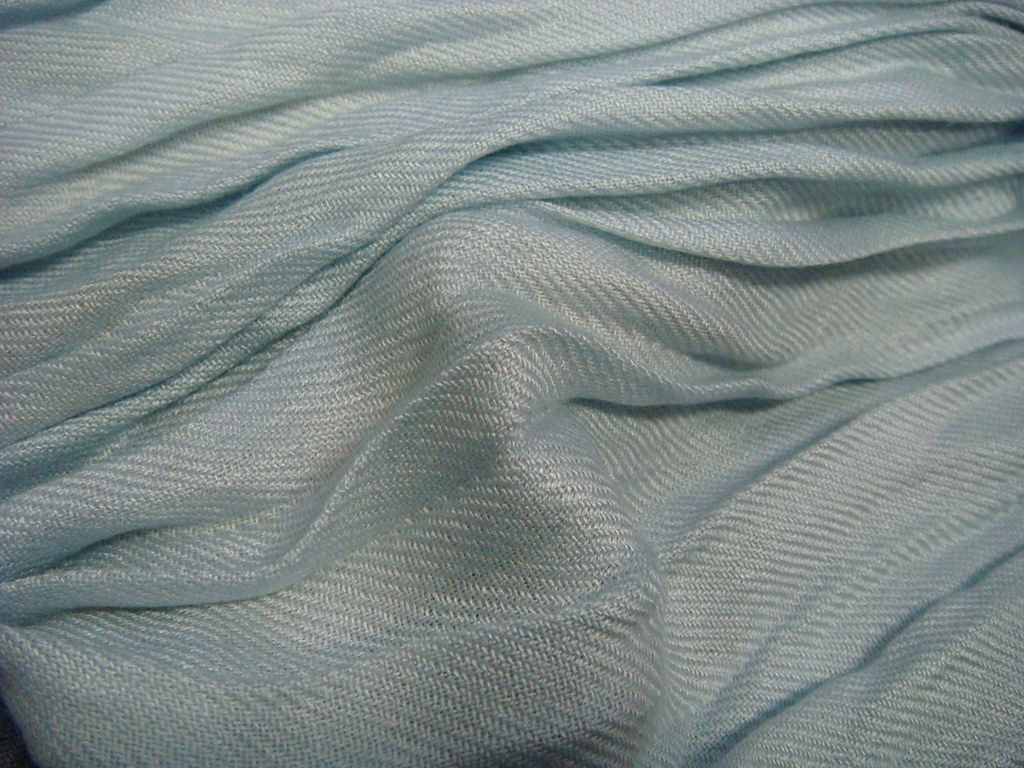
Before anything is cut, the fabric is checked — for the right composition and weight, for weaving or knitting faults, and for shade consistency across rolls.
Shade is the one to understand. Fabric is dyed in batches, and two batches of the same colour are never perfectly identical. Rolls are grouped by shade so that a single garment is never cut across two of them — a sleeve and a body that do not match is a defect nobody can fix afterwards.
Decides: colour consistency, and whether faults get cut into garments.
2. Relaxing and spreading
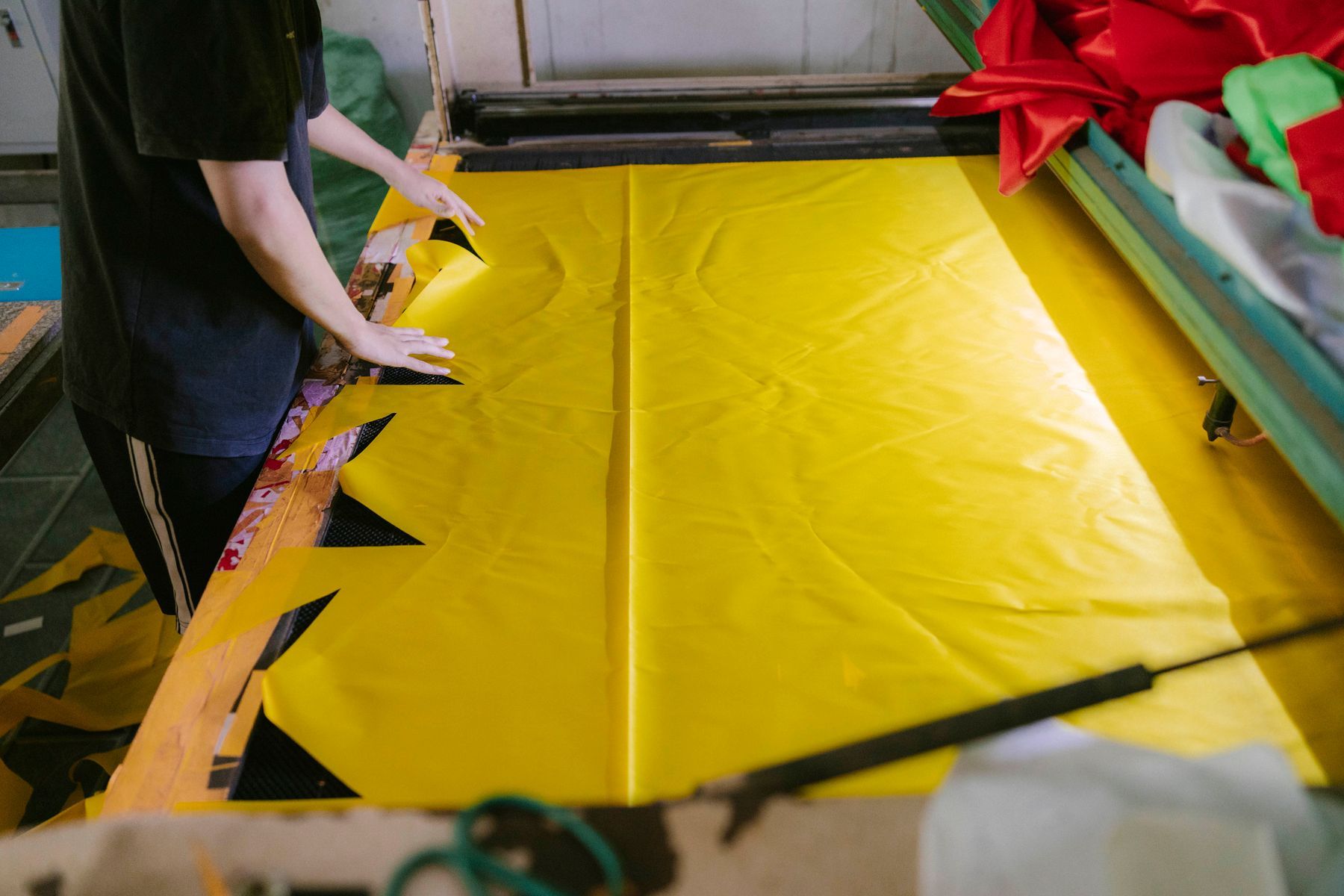
Fabric arrives under tension from the roll. If it is cut immediately it will relax afterwards and the pieces will change size. So it is spread flat and left to settle before cutting.
Skipping this is a real cause of garments that measure correctly on the cutting table and wrongly in the finished box.
Decides: dimensional accuracy of everything cut from it.
3. Marker making and cutting
The pattern pieces are arranged into a marker — the layout that fits the most garments into the least fabric. Marker efficiency is a genuine cost lever; better nesting means more garments per metre.
Layers are then spread up and cut together, usually with a straight knife or a die for small components. Pieces are bundled by size and colour so they stay together through sewing.
Decides: fabric consumption, and therefore a large part of the unit cost.
More detail on this stage: pattern making and fit.
4. Decoration, before assembly
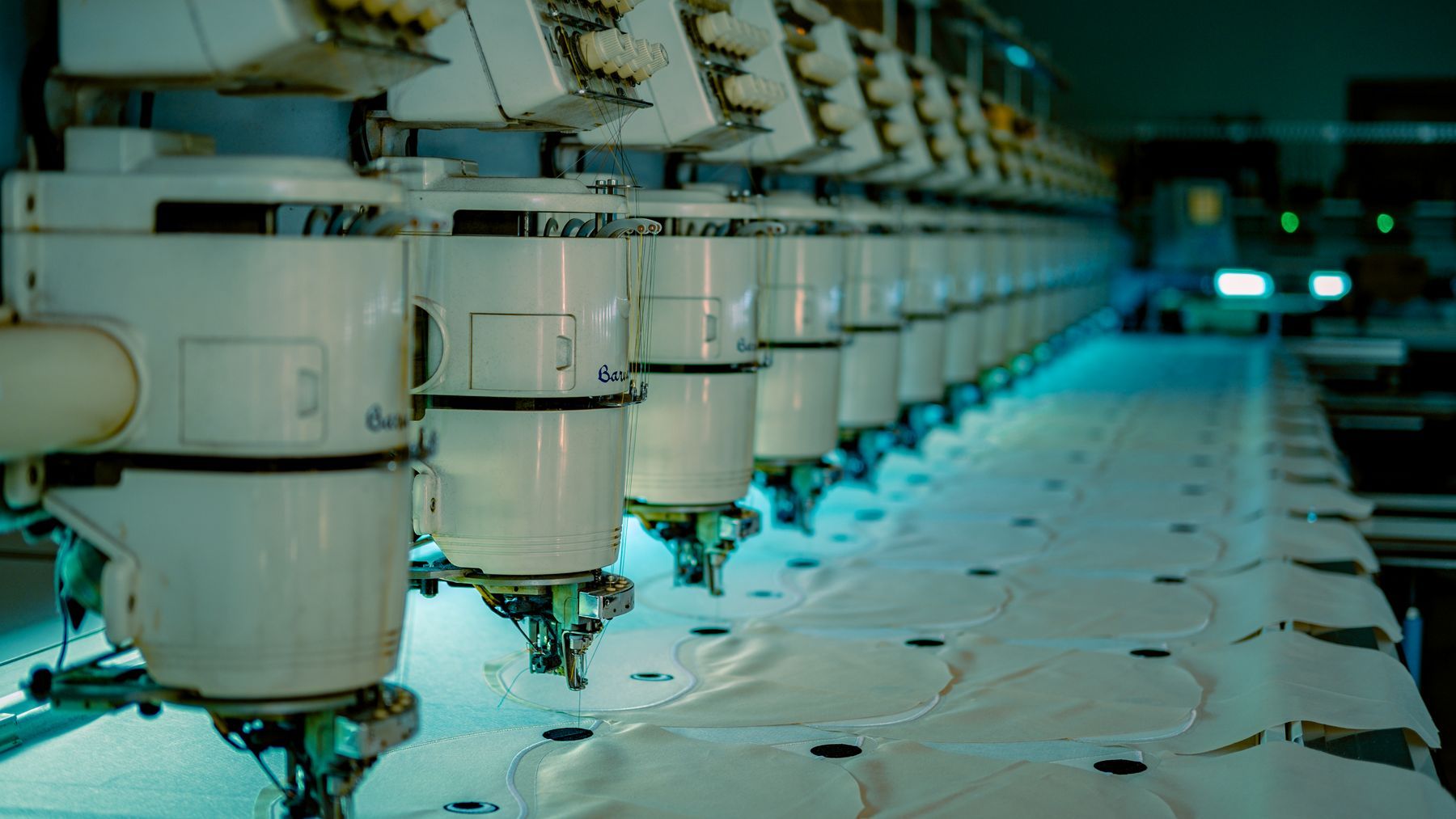
Printing and embroidery happen while pieces are still flat, wherever possible. Embroidering a flat front panel is straightforward; embroidering an assembled garment is slow and risks the rest of it.
This is why placement decisions have to be made before production starts, not during. See printing and embroidery.
Decides: whether decoration is clean or compromised.
5. Sewing
The line is set up for one style at a time. Each operator repeats a small number of operations, which is how consistency and speed are achieved simultaneously.
Sleepwear-specific concerns:
- Soft, mobile fabrics need correct needle, thread and tension, or seams pucker and knits distort.
- Elastic waistbands must be applied at even tension. Uneven application is the direct cause of a waistband that twists after washing.
- Seam type matters. French seams and covered seams take longer and are more comfortable against skin — a genuine quality difference in a garment worn against bare skin all night.
In-line checks happen here rather than only at the end, because a setting error caught on the first bundle costs one bundle, and caught at final inspection costs the order.
Decides: most of what a customer perceives as quality.
6. Finishing
Trimming loose threads, pressing, and attaching labels and tags. See labels and packaging.
Small stage, disproportionate visual impact — pressing is much of the difference between a garment that looks retail-ready and one that looks like it came out of a box.
Decides: first impression at unboxing.
7. Final inspection
Finished garments are inspected against the sealed sample: measurements at specified points, workmanship, colour, labelling, and function of anything that opens or closes.
The reference is always the sealed sample, never a description of it. That is the entire point of sealing one. See quality control.
Decides: what actually leaves the building.
8. Packing
Folding to a fixed dimension, bagging or boxing, cartoning and labelling for shipment. The folded dimension has to be fixed before packaging is ordered — boxes bought against an estimate is an avoidable and annoying cost.
Decides: freight volume, and how the product presents on arrival.
What this means for your order
Three things are worth taking from the sequence:
- The sealed sample is the specification. Everything downstream is reproduction. Time spent getting the sample right is the highest-return time in the whole project.
- Changes get more expensive the later they land. A construction change during sampling is a conversation. The same change after cutting is a new order.
- Ask which steps are in-house. A supplier who runs cutting, sewing, decoration, finishing and inspection under one roof can answer for the whole sequence. One who subcontracts three of them can answer for two.
Want to see how this would run for your styles? Send your requirements and we will map your range against these stages, including where we think the risks are.