Fabrics
What Is Milk Silk Fabric? The Truth About the Viral Soft Knit
Milk silk is not silk. Commercial sleepwear sold under the name is a double-brushed polyester-spandex knit — here is what it is made of, how it feels, and what you can legally call it.
By PajamaWorks Team, Sleepwear production team, Dongguan Hualingniao Apparel ·
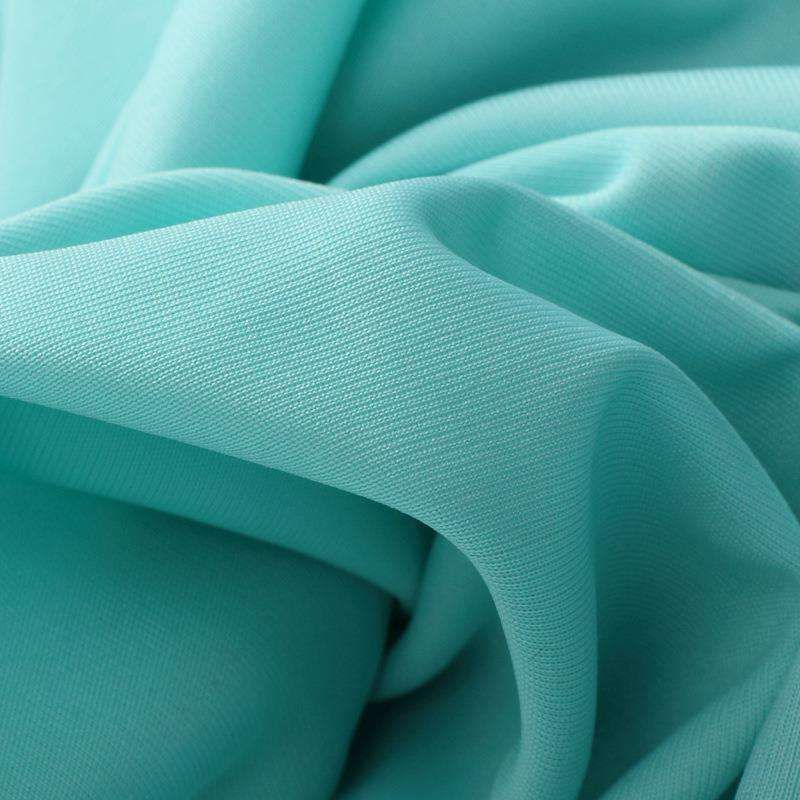
Short answer: no, milk silk is not silk — and in commercial sleepwear it is usually not milk either. Almost all sleepwear sold as “milk silk” is an engineered polyester knit: 92–95% ultra-fine polyester blended with 5–8% spandex, knitted at 160–190 GSM for spring/summer or 200–240 GSM for four-season loungewear, then double-brushed and softened in a silicone bath. That is what produces the creamy, cloud-like hand feel. Casein fiber made from milk protein does exist, but it is a niche, costly fiber that rarely reaches bulk sleepwear.
During a recent factory tour, an apparel brand founder paused at our inspection line, picked up a finished sleepwear set, and felt the fabric between their fingers. Their reaction was immediate: “This feels buttery soft, drapey, and incredibly luxurious—it feels just as good as the $70 modal sets trending on TikTok and Instagram. What fabric is this, and why haven’t we tested it?”
It was milk silk fabric (known in textile manufacturing as double-brushed poly-spandex jersey).
Most emerging sleepwear founders assume that achieving that viral, cloud-like hand feel requires premium Lenzing modal, bamboo viscose, or mulberry silk. While those fibers have their place, they come with high raw material prices and strict minimums. Milk silk delivers a hand feel and visual drape that easily holds its own against those expensive alternatives—while slashing bulk manufacturing costs by over 50%.
Here is the honest, factory-floor breakdown of what milk silk actually is, how it performs against expensive alternatives, the exact cost math, and the legal labeling rules you must follow before selling it.
Is milk silk polyester?
Yes, in almost every case. Read the care label on commercial “milk silk” sleepwear and the overwhelming majority will list polyester and spandex, not milk protein — and under FTC textile labeling rules those generic fiber names must appear on the label; the trade term can sit alongside them, never in place of them. If a listing says only “milk silk” and never names the fiber, it is almost certainly a brushed polyester knit; the composition panel is what confirms it.
The industry truth: What is commercial milk silk made of?
Search for “milk silk fabric” online and you will find textbook descriptions claiming it is a semi-synthetic fiber extracted from dairy casein protein.
Casein protein fibers do exist, but they are niche and costly — almost all commercial sleepwear sold as “milk silk” in global supply chains is not made from milk.
In production facilities across the apparel industry, commercial milk silk is an engineered knit:
- Composition: 92% to 95% ultra-fine polyester blended with 5% to 8% spandex (elastane).
- Yarn spec: High-filament Drawn Textured Yarn (DTY), commonly 75D/72F or 100D/144F.
- Surface treatment: Both sides undergo mechanical micro-brushing (double-brushed), followed by a specialized silicone softening bath during finishing.
- Weight range: Typically knitted at 160 to 190 GSM for spring/summer sets, and 200 to 240 GSM for four-season loungewear.
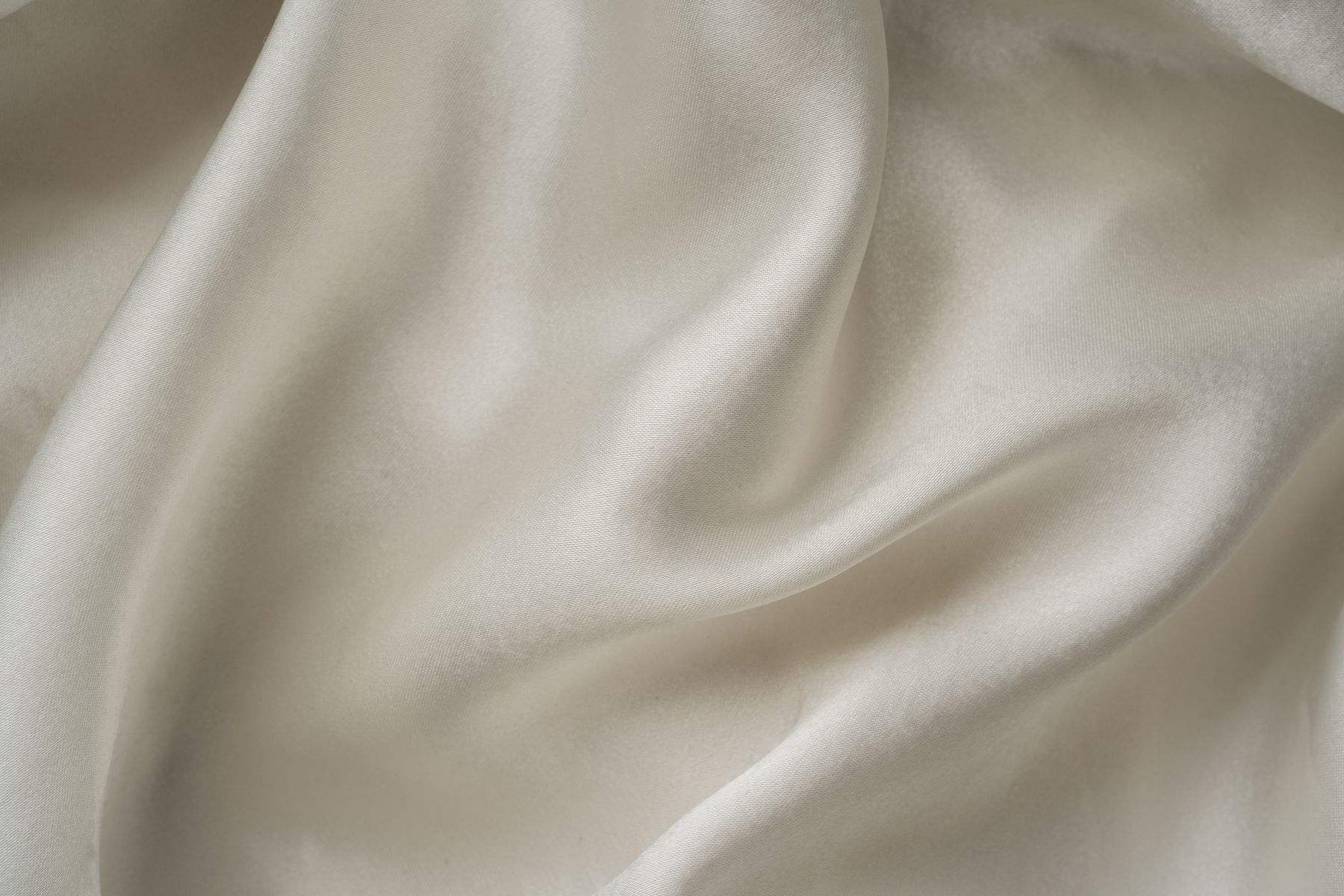
The name “milk silk” is an industry trade term describing its tactile sensory profile: it feels as creamy and soothing as milk against the skin, with the smooth glide and fluid drape of silk.
It doesn’t feel like a budget compromise
A common misconception among new buyers is that polyester-based knits must feel scratchy, stiff, or cheap. That might be true for coarse 1970s double-knits, but modern high-filament brushed microfibers operate on a completely different level.
When brand owners compare milk silk directly with modal or cotton swatches on a cutting table, several things stand out:
- Buttery hand feel: The micro-brushed filament loops create a peach-skin velvet touch that rivals 60s micro-modal.
- Four-way stretch and fluid recovery: Unlike standard cotton jerseys that can sag or bag at the knees, the 5–8% spandex blend snaps back cleanly after washing and wearing.
- Weightless drape: It contours over the body without clinging, creating flattering silhouettes for loungewear sets, slip dresses, and relaxed pajama pants.
- Resilience in the wash: Natural cellulosics like modal and viscose are prone to surface fuzzing, fuzz-ball pilling, and dimensional distortion if dried incorrectly. Milk silk is virtually wrinkle-free, maintains its shape, and survives dozens of domestic wash cycles without losing its silky hand.
Cost breakdown: Milk silk vs. modal vs. cotton
The real game-changer for growing sleepwear brands is unit economics. Fabric represents roughly 55% to 65% of the Free on Board (FOB) cut-and-sew garment cost.
Here is how commercial milk silk compares to modal and combed cotton in real production runs:
| Metric | Commercial Milk Silk (95/5) | Modal Spandex Jersey (95/5) | Combed Cotton Jersey (100%) |
|---|---|---|---|
| Raw fabric price | $2.80 – $3.80 / kg ($1.30 – $1.80 / meter) | $7.50 – $9.50 / kg ($4.00 – $6.00 / meter) | $5.00 – $6.50 / kg ($2.80 – $3.80 / meter) |
| Typical fabric weight | 160 – 190 GSM | 200 – 220 GSM | 160 – 180 GSM |
| Fabric yield per set | ~1.6 – 1.9 meters | ~1.6 – 1.9 meters | ~1.6 – 1.9 meters |
| Estimated FOB per set | Around $9.00 ($8.50 – $9.80) | $15.00+ minimum ($15.00 – $20.00+) | $11.00 – $13.50 |
| Target retail price | $35.00 – $48.00 | $68.00 – $98.00 | $45.00 – $65.00 |
| DTC gross margin | 75% – 80% | 70% – 78% | 70% – 76% |
For an emerging e-commerce brand ordering an initial run of 500 to 1,000 sets across sizes, saving $6.00 or more per garment by choosing milk silk over modal frees up thousands of dollars in immediate working capital. That capital can go directly into creator gifting on TikTok, paid social customer acquisition, and elevated custom packaging.
For a deeper dive into how yardage and cut-and-sew labour shape total unit costs, read our guide on pajama manufacturing costs.
The secret weapon for holiday and all-over prints
If your brand sells printed sleepwear—such as matching family Christmas pajamas, floral spring sets, or custom boutique graphics—milk silk offers an immense manufacturing advantage: sublimation heat transfer printing.
- Photographic color vibrancy: Disperse dyes bond at the molecular level with polyester fibers under heat and pressure, producing sharp outlines and deep black or neon tones that reactive printing on cotton cannot match.
- Zero hand-feel alteration: Unlike screen printing with rubberized inks that make the fabric feel stiff on the chest, dye sublimation leaves the brushed milk silk surface 100% soft and breathable.
- No color bleeding or fading: The print will not fade or crack after dozens of domestic laundry loads, scoring Grade 4.5+ on standard AATCC colorfastness tests.
- Lower sampling costs: Digital sublimation paper requires no physical screens or engraving cylinders, making short print runs for seasonal launches far more economical.
Learn more about matching graphics and fabric selection in our guide to custom Christmas pajamas production and licensed character pajama artwork.
Where milk silk has limitations (and where modal still wins)
Every textile has trade-offs. As an honest manufacturing partner, we never recommend milk silk without explaining its physical limitations:
- Moisture regain and breathability: Polyester fibers have a low standard moisture regain of roughly 0.4%, compared to modal at 13% and natural cotton at 8.5%. While the knit mesh breathes well enough for climate-controlled indoor sleeping, it is not engineered for heavy night sweats.
- Warm climate perception: For hot sleepers without air conditioning, natural cellulosic fibers like modal and viscose provide superior evaporative cooling.
- Static buildup: Like all synthetics, untreated polyester can build up static charge in extremely dry winter indoor environments (though anti-static finishing agents during fabric dyeing can significantly mitigate this).
If your brand’s core positioning is clinical sleep wellness, menopause night-sweat relief, or strict 100% natural organic certifications, modal fabric or organic cotton remains the right choice. But for lifestyle, fast-turnaround loungewear, and social-first sleepwear collections, milk silk hits the sweet spot between touch and price.
FTC labeling rules: Avoid this critical brand mistake
This is the single most critical compliance point for any brand importing into the United States, Canada, the UK, or the European Union:
Under the U.S. Federal Trade Commission (FTC) Textile Fiber Products Identification Act and ISO 2076 rules, you cannot put “100% Milk Silk” or “Milk Fiber” on the sewn-in garment care label.
Just as the FTC levied multimillion-dollar penalties against retailers who labeled chemically regenerated rayon as “pure bamboo,” customs authorities and regulators will flag garments that label synthetic knits as “milk silk.”
The correct labeling strategy:
- On the permanent care label / wash label: You must disclose the true generic fiber composition by percentage:
95% Polyester, 5% Spandex (or 92% Polyester, 8% Spandex)
- On hang tags, packaging, and marketing copy: You are free to describe the fabric’s commercial hand and finish:
“Crafted from our signature Milk Silk brushed jersey—ultra-soft, buttery knit with four-way stretch (95% Polyester, 5% Spandex).”
This approach protects your brand from regulatory scrutiny and customs holds while giving your customers the descriptive romance language they respond to. For detailed care label layouts, refer to our guide on woven vs. printed labels.
Frequently asked questions about milk silk pajamas
Is milk silk fabric safe for sensitive skin?
Yes. Quality commercial milk silk produced in compliant mills is OEKO-TEX Standard 100 certified, ensuring it is free from harmful levels of allergenic dyestuffs, formaldehyde, or heavy metals. The ultra-fine micro-brushed filaments reduce friction against delicate skin.
Will milk silk pajamas shrink in the dryer?
Polyester is a thermoplastic polymer with high dimensional stability. Unlike cotton and rayon knits that can shrink 5% to 8% if washed in hot water, milk silk experiences minimal dimensional shrinkage (typically under 2% under standard home laundering).
What styles are best suited for milk silk?
Milk silk performs best in relaxed two-piece pajama sets, flowy nightgowns, ladies’ cami and shorts sleep sets, and draped loungewear pants. It is less suited for structured, crisp tailored garments like heavy button-down pajama jackets that require crisp fused collars.
Looking to sample milk silk for your next collection?
If you have been struggling to launch a soft, premium-feeling sleepwear collection due to modal’s high fabric costs and minimums, milk silk offers an immediate production solution.
At PajamaWorks, we knit, dye, print, and manufacture private-label sleepwear directly in our facility. We can send you physical swatch cards comparing 180 GSM milk silk brushed jersey directly against modal and cotton knits so you can test the hand feel yourself.
Ready to explore fabrics or request samples? Contact our sourcing team with your target styles, or learn more about our fabric sourcing process.